An Industrial IoT solution connects your physical assets—from factory robots to delivery trucks—to a central digital brain. This isn't just about data collection; it's a strategy to turn raw machine signals into tangible outcomes like boosted efficiency, slashed operational costs, and safer workplaces. By giving your equipment a voice, you can move from reacting to problems to proactively optimizing your entire operation.
Why an Industrial IoT Solution Delivers Real Value
Imagine a factory where machinery not only performs its tasks but also predicts its own maintenance needs, helping optimize production schedules in real-time. This is the direct result of a well-designed industrial iot solution. The technology has shifted from a niche concept to a competitive necessity.
By embedding sensors into industrial equipment, you create a real-time data feed that provides a high-fidelity view of your operations. It’s like giving your machinery a voice, allowing it to report its health, performance, and needs, enabling a shift from reactive problem-solving to proactive, data-driven management.
The Convergence Driving IIoT Adoption
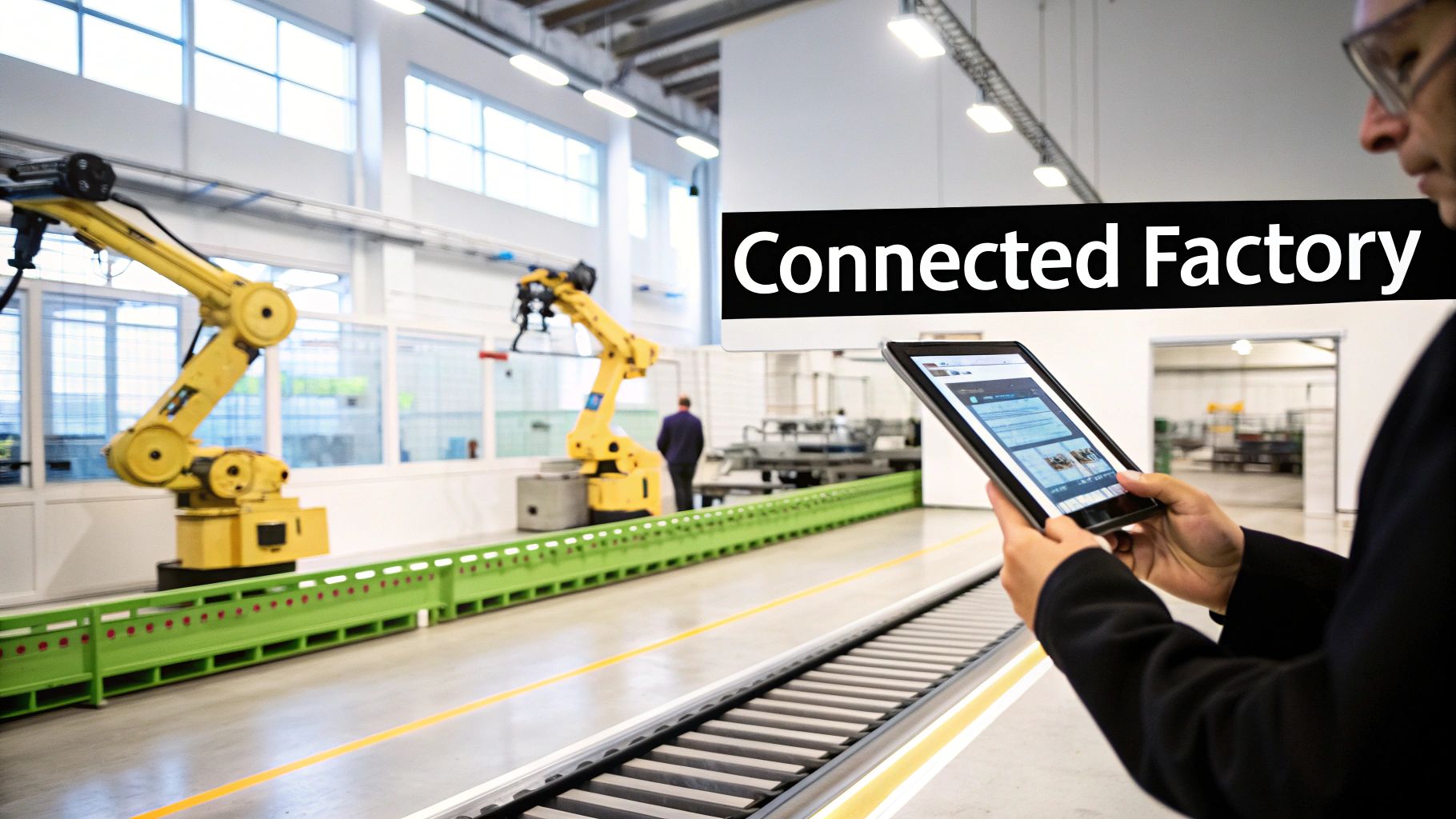
The recent boom in IIoT is driven by three key technologies becoming more accessible and powerful:
- Affordable Sensors: The cost of high-quality sensors for temperature, vibration, and location has dropped, making it feasible to monitor thousands of assets.
- Powerful Cloud Platforms: Data platforms like Snowflake are built to handle the massive volume and velocity of machine data, providing a scalable "brain" for analysis.
- Intelligent Automation: Agentic AI can now interpret incoming data and automatically trigger actions, such as creating a maintenance ticket the moment a machine shows signs of wear.
The market reflects this growth. The Industrial IoT (IIoT) market, valued at USD 514.39 billion in 2025, is projected to hit USD 2,146.07 billion by 2034, growing at a 17.20% CAGR. While manufacturing leads, logistics is expanding rapidly at a 25.6% CAGR, showing IIoT's critical role in modernizing core industries. You can explore these trends in the full research.
The Core Architecture of a Modern IIoT System
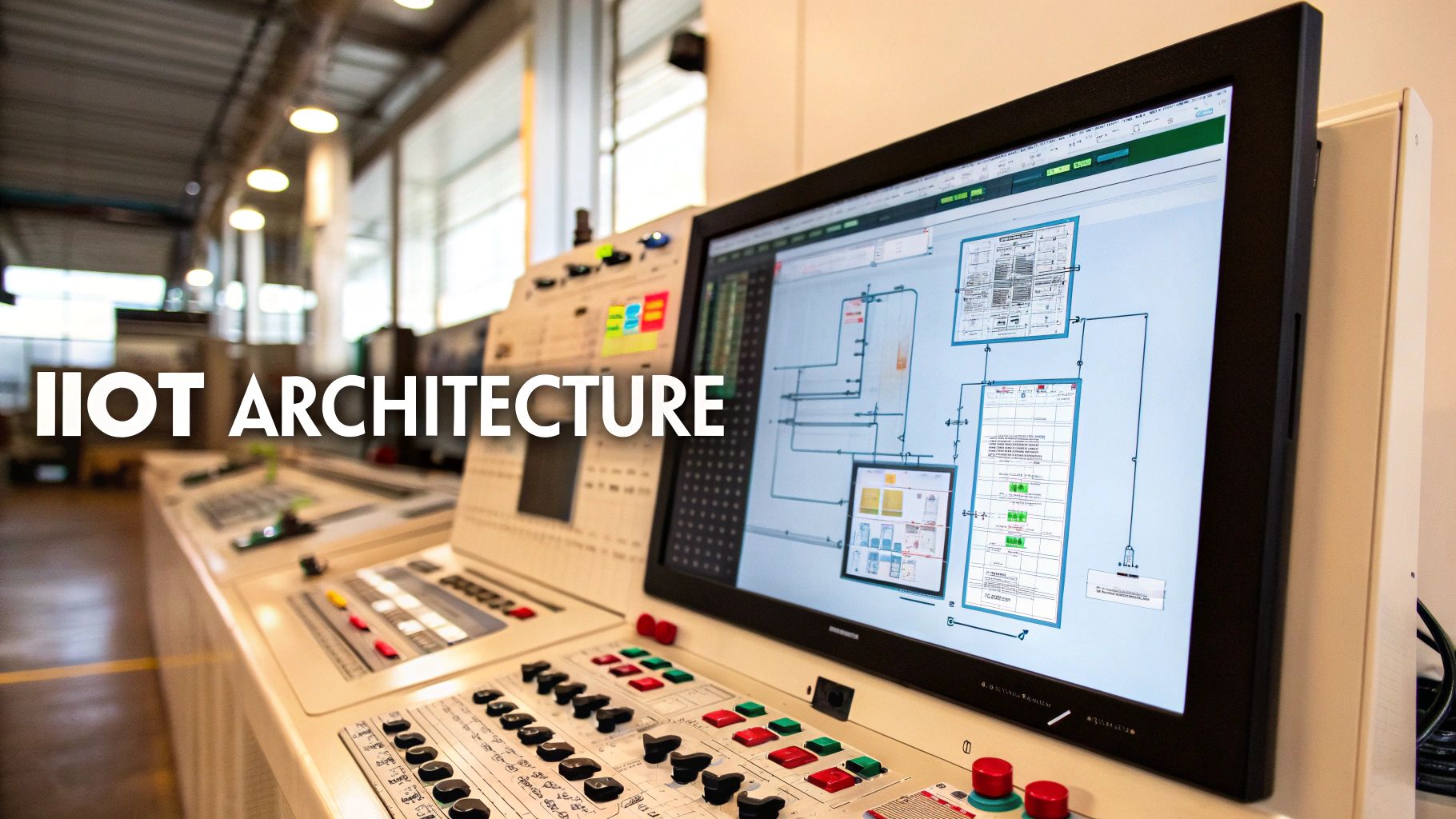
A complete industrial IoT solution works like a nervous system, sensing the physical world, transmitting information, and triggering an intelligent response. This layered architecture transforms raw data from a single sensor into strategic business decisions. Each layer has a specific job, creating a scalable and manageable system.
Let's break down the essential components that turn physical events into digital intelligence.
Components of an Industrial IoT Solution
LayerFunctionKey TechnologiesEdge/Sensor LayerCaptures data from assets and performs initial processing at the source.Temperature/pressure/vibration sensors, actuators, PLCs, edge devices.Connectivity/Gateway LayerSecurely transmits data from the operational environment to the IT network.IIoT Gateways, MQTT, Wi-Fi, Ethernet, Private 5G.Data Ingestion/StorageIngests, stores, and organizes massive volumes of streaming data for analysis.Cloud data platforms (Snowflake, AWS, Azure), time-series databases.Analytics/Application LayerAnalyzes data to uncover insights, predict outcomes, and automate actions.Machine learning models, BI dashboards, predictive maintenance apps, APIs for microservices.
Each layer works in concert to deliver operational value.
The Senses Layer: Edge Devices and Sensors
This is where data collection begins. The edge and sensor layer acts as the system's eyes and ears, capturing raw data from industrial assets.
- Sensors: These devices measure physical properties. For example, a vibration sensor on a motor can detect subtle changes that signal an impending bearing failure, allowing for proactive repairs.
- Actuators: While sensors gather data, actuators take action, such as shutting off a valve or adjusting a motor's speed based on commands.
- Edge Devices: These small computers near the sensors perform edge computing—filtering and analyzing data at the source. This reduces network traffic and enables near-instant local responses, like shutting down a machine to prevent damage.
The Nerves Layer: Connectivity and Gateways
The connectivity and gateway layer is the nervous system that securely transmits data from the edge to the cloud. The IIoT gateway is a critical bridge between your operational technology (OT) and information technology (IT) networks, translating protocols and encrypting data for security. Connectivity options range from standard Wi-Fi to specialized networks like Private 5G for mission-critical, low-latency applications.
The Brain: Cloud Platform and Analytics
All data flows to the cloud platform and analytics layer—the system’s brain. Here, massive data streams are ingested, stored, and analyzed to uncover valuable insights. A modern platform like Snowflake is purpose-built for the scale and speed of IIoT data. By applying machine learning, businesses can move beyond monitoring to predicting failures and optimizing entire processes. For more on this, see how you can mitigate risks in complex systems through simulation and IoT.
Unifying Your IIoT Data with Snowflake
Industrial data is a high-volume, high-velocity stream that can overwhelm traditional databases. A modern data platform like Snowflake acts as the central nervous system for your industrial iot solution, built to handle this relentless flow.

Snowflake’s architecture separates compute from storage, allowing you to ingest massive sensor streams without slowing down analytics. This unified approach eliminates data silos, enabling you to analyze real-time and historical data together. For a deeper look, explore our insights on managing time-series data with Snowflake.
From Basic Tracking to Predictive Power
By centralizing high-fidelity data, a business can shift from asking "Where is our asset?" to answering more valuable questions like, "Which component is most likely to fail in the next 500 hours?" This forward-looking capability turns data into a strategic asset that drives proactive decisions and tangible business results.
Use Case: Unlocking Outcomes in Logistics
Consider a logistics company using telematics to stream data from its fleet into Snowflake. This isn’t just about collecting data; it’s about connecting it to specific, measurable outcomes.
- Fuel Optimization: By analyzing GPS, route, traffic, and weather data, the company develops algorithms to identify the most efficient routes. Outcome: A potential savings of millions in annual fuel costs.
- Predictive Maintenance: Sensors monitor engine temperature, oil pressure, and vibration to provide early warnings of mechanical failures. Outcome: A dramatic reduction in unplanned downtime and costly roadside repairs.
- Compliance and Quality Assurance: Continuous temperature monitoring in refrigerated trucks ensures cargo integrity. Outcome: Prevention of spoilage, ensuring regulatory compliance and protecting revenue and customer trust.
By unifying this data, the company transforms its industrial iot solution from a simple monitoring tool into a predictive powerhouse, enabling leaders to anticipate problems and optimize operations at scale.
Driving Proactive Operations with Agentic AI
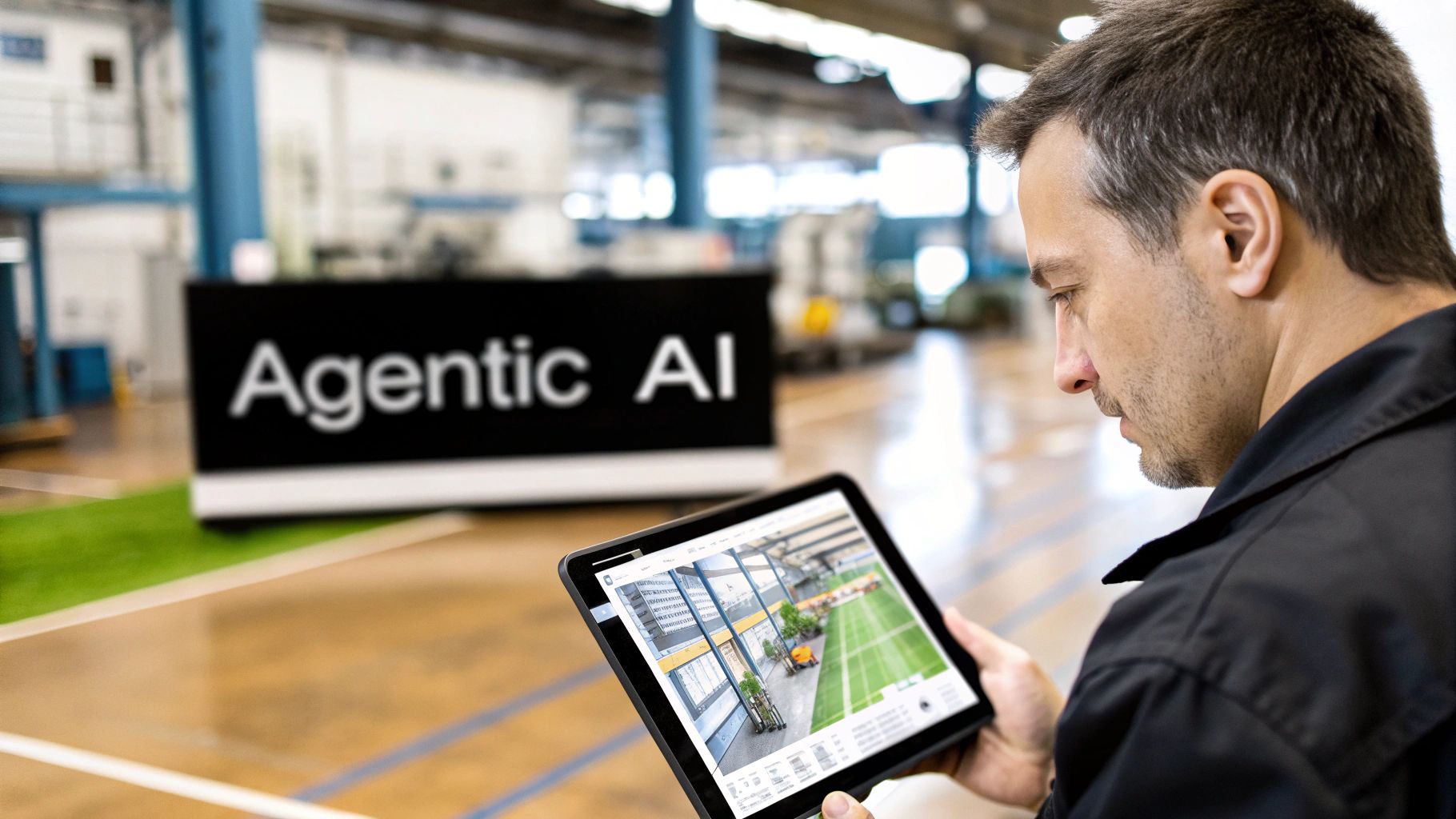
Having unified data in Snowflake is the foundation. The next step is putting that data to work autonomously with Agentic AI, which acts as the hands and feet of your industrial iot solution. Instead of generating dashboards for human analysis, AI agents execute complex tasks and make decisions based on live sensor data, closing the loop between insight and action.
From Anomaly Detection to Automated Resolution
A prime example is predictive maintenance for manufacturing, which helps prevent equipment failures before they happen.
Use Case: A Conveyor Belt Motor in a Manufacturing Plant
- Detect Anomaly: An IIoT vibration sensor detects a slight but consistent increase in vibration on a critical motor, deviating from its normal baseline stored in Snowflake.
- Diagnose Issue: An AI agent analyzes the vibration pattern against historical data and concludes with 85% probability that a bearing is failing and will likely seize within 72 hours.
- Automate Response: The agent initiates a multi-step workflow across different business systems, orchestrating the entire fix.
A Coordinated, Multi-System Workflow
The AI agent's automated workflow ensures all resources are aligned before the machine fails, transforming a potential crisis into a planned, efficient repair.
- Create Maintenance Ticket: The agent connects to the company's ERP system (e.g., SAP) and automatically generates a high-priority work order with the diagnosis, required part number, and optimal repair window.
- Check Inventory Levels: It queries the inventory system to confirm a replacement bearing is in stock. If not, it can check other facilities or initiate a purchase order.
- Schedule Repair: The agent accesses the maintenance team's calendar, finds an available technician, and schedules the repair during a planned production slowdown to minimize disruption.
This entire sequence, from detection to scheduling, happens in seconds. This proactive model drastically reduces unplanned downtime, cuts emergency repair costs, and extends asset life, turning your industrial iot solution into an autonomous workforce that actively optimizes your bottom line.
Putting Industrial IoT to Work: Real-World Wins
The true measure of an industrial IoT solution is the tangible results it delivers. Here are real-world examples of how companies are using this technology to solve major operational challenges and achieve high-impact outcomes.
Use Case: Smart Manufacturing
A manufacturer was plagued by unplanned downtime from its CNC milling machines, causing production delays and high emergency repair costs.
- Solution: They installed vibration and temperature sensors on critical motors, streaming data to establish a baseline for healthy performance.
- Outcome: The system detected subtle anomalies that signaled impending failures. This allowed the team to schedule proactive maintenance, resulting in:
- A 30% reduction in unplanned machine downtime.
- A significant increase in Overall Equipment Effectiveness (OEE).
- Slashed maintenance costs by eliminating rush orders and overtime.
Use Case: Energy Management
A utility company struggled with slow, manual processes for locating power outages, leading to long customer disruptions.
- Solution: They deployed a network of smart grid sensors across their distribution lines to continuously monitor voltage and current.
- Outcome: When an outage occurs, the system instantly identifies the fault location. This real-time visibility led to:
- Instantaneous fault detection, drastically reducing crew response times.
- A more reliable grid and shorter customer outage durations.
- Lower operational costs from eliminating manual inspections.
Use Case: Logistics and Fleet Optimization
A national logistics firm faced rising fuel costs and challenges in managing driver safety across its large fleet.
- Solution: They equipped their trucks with advanced telematics devices that transmitted GPS location, speed, fuel consumption, and driving behavior data.
- Outcome: Analyzing this data provided a complete view of fleet operations, enabling targeted driver training and dynamic route adjustments. This delivered a clear ROI:
- A 15% reduction in overall fuel expenses.
- A significant decrease in preventable accidents.
Your Roadmap to Implementing an IIoT Solution
A successful Industrial IoT solution requires a pragmatic, phased approach to deliver value quickly and build momentum. Follow these four steps to move from a focused concept to an enterprise-wide success.
1. Start Small with a High-Impact Problem
Don't try to solve everything at once. Identify a single, high-impact business problem with clear financial consequences, such as a production line known for downtime or a logistics route plagued by inefficiency. This focus makes the project manageable and its success easy to measure.
2. Run a Focused Pilot Project
With your target problem identified, run a pilot to prove the concept and calculate a clear Return on Investment (ROI) quickly. For example, if addressing machine downtime, install sensors on a few critical assets. Track metrics like uptime and costs before and after to build a data-backed case for a larger investment.
3. Design for Scale from Day One
While your pilot is small, your architecture must be designed for growth. Choose a flexible, scalable platform like Snowflake that can handle data from thousands of sensors, not just the ten in your pilot. This foresight prevents costly re-engineering as your needs expand.
4. Plan for People and Processes
Technology is only half the battle. Focus on change management and training to ensure user adoption. Show your teams how the new data and tools will make their jobs easier, not more complex. Plan training sessions to help technicians, operators, and managers interpret data and act on new insights. True value is realized when the solution is not just implemented, but fully embraced.
Got Questions? We've Got Answers.
Here are straightforward answers to common questions about implementing an industrial IoT solution.
How Long Does a Pilot Project Really Take?
A well-defined pilot project can deliver initial results in three to six months. This timeframe includes defining the problem, deploying sensors, and analyzing the first data sets to prove ROI. The key is a laser-focused goal, such as, "We will reduce unplanned downtime on Line 3 by 15%," which makes success clear and undeniable.
How Do We Keep Our IIoT System Secure?
Security must be integrated from the start using a defense-in-depth strategy:
- At the Edge: Data is encrypted on the device before it leaves the factory floor.
- In Transit: Secure protocols like MQTT over TLS protect data as it moves across the network.
- In the Cloud: Platforms like Snowflake provide robust access controls, encryption, and audit logs to keep data safe.
Additionally, network segmentation, which isolates your operational technology (OT) network from your IT network, is a critical practice to minimize your attack surface.
What's the Big Deal? Isn't This Just Regular IoT?
While they share a foundation of connected devices, consumer IoT (like smart thermostats) is about convenience. An industrial IoT solution (IIoT) is engineered for harsh environments like factory floors and oil rigs, where reliability, precision, and security are paramount. In an industrial setting, a failure isn't an inconvenience—it can lead to significant financial loss or a major safety incident.


